LUMOSAI
View Live Site ↗A multi-tool AI SaaS platform on the PERN stack. Six AI-powered tools behind Clerk authentication and subscription billing, running on serverless Postgres via Neon. Built solo, deployed on Vercel.
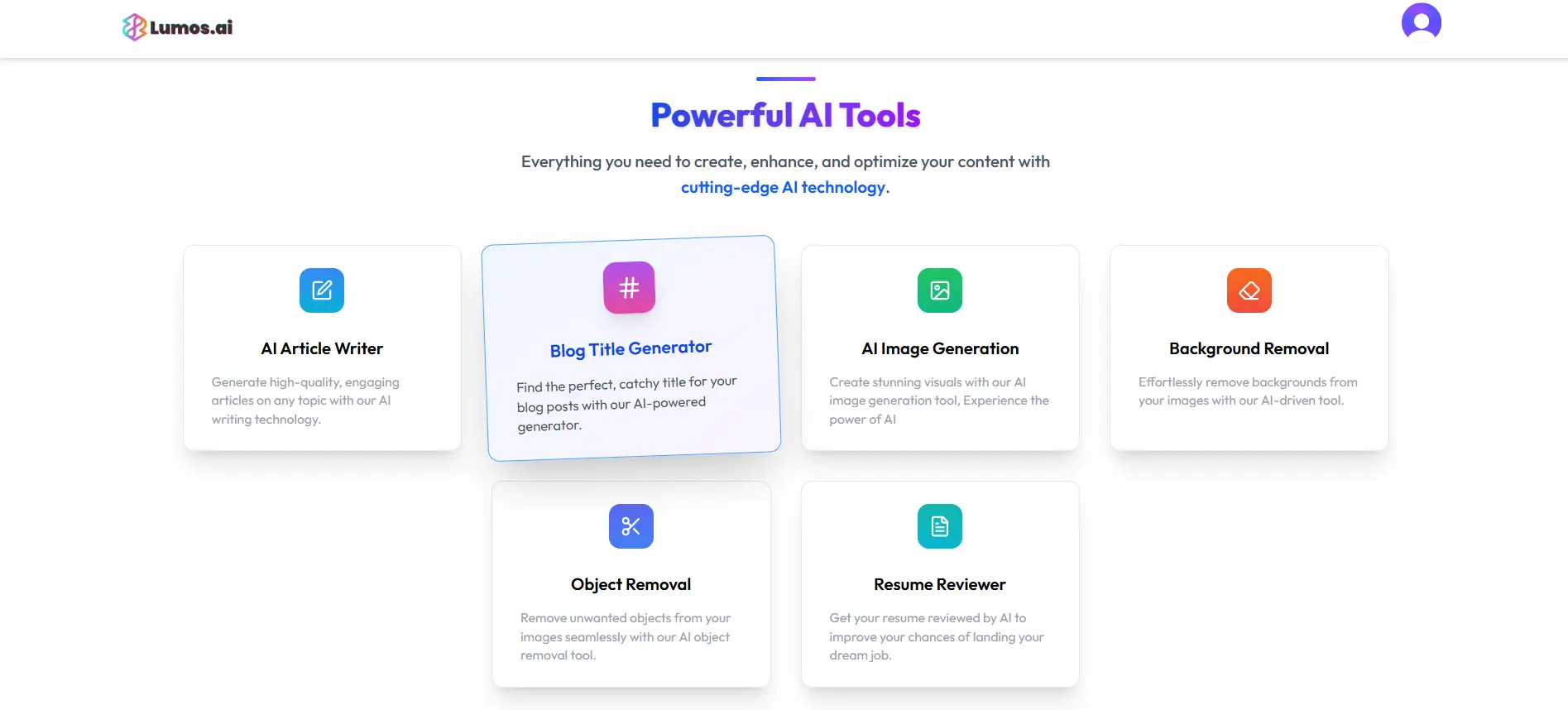
LumosAI is a multi-tool AI SaaS platform with six tools under one subscription: article generator, blog title generator, image generator, background remover, object remover, and resume analyser. The goal was a real SaaS product with actual auth, actual billing gates, and AI integrations that work end to end.
The engineering problem was not connecting to AI APIs — that part is straightforward. The hard part was making six different tools feel like one product while enforcing subscription limits correctly, handling PDF uploads for the resume tool, and making sure a free user hitting their monthly limit gets a clear message instead of a silent 500.
Clerk was chosen over rolling auth manually because it handles OAuth, session management, and subscription metadata in one SDK. Neon was chosen over a standard managed Postgres instance because the serverless model means no idle costs and no manual scaling intervention when traffic spikes.

Three things had to be true. One: feature gating at both layers. The frontend disables premium routes so the UI is honest, but the backend API also validates subscription before processing any request. Bypassing the frontend still hits a wall. Client-side gating alone is security theatre in any SaaS.
Two: real billing enforcement. The subscription system tracks plan tier and enforces monthly usage limits per tool. The middleware checks this on every request and rejects it before any AI call is made if the limit is hit. Three: each tool must actually work. The image generator calls ClipDrop, uploads to Cloudinary, and returns a real URL. The resume analyser accepts a PDF via Multer, validates the file, reads the content, and returns structured feedback from Gemini.
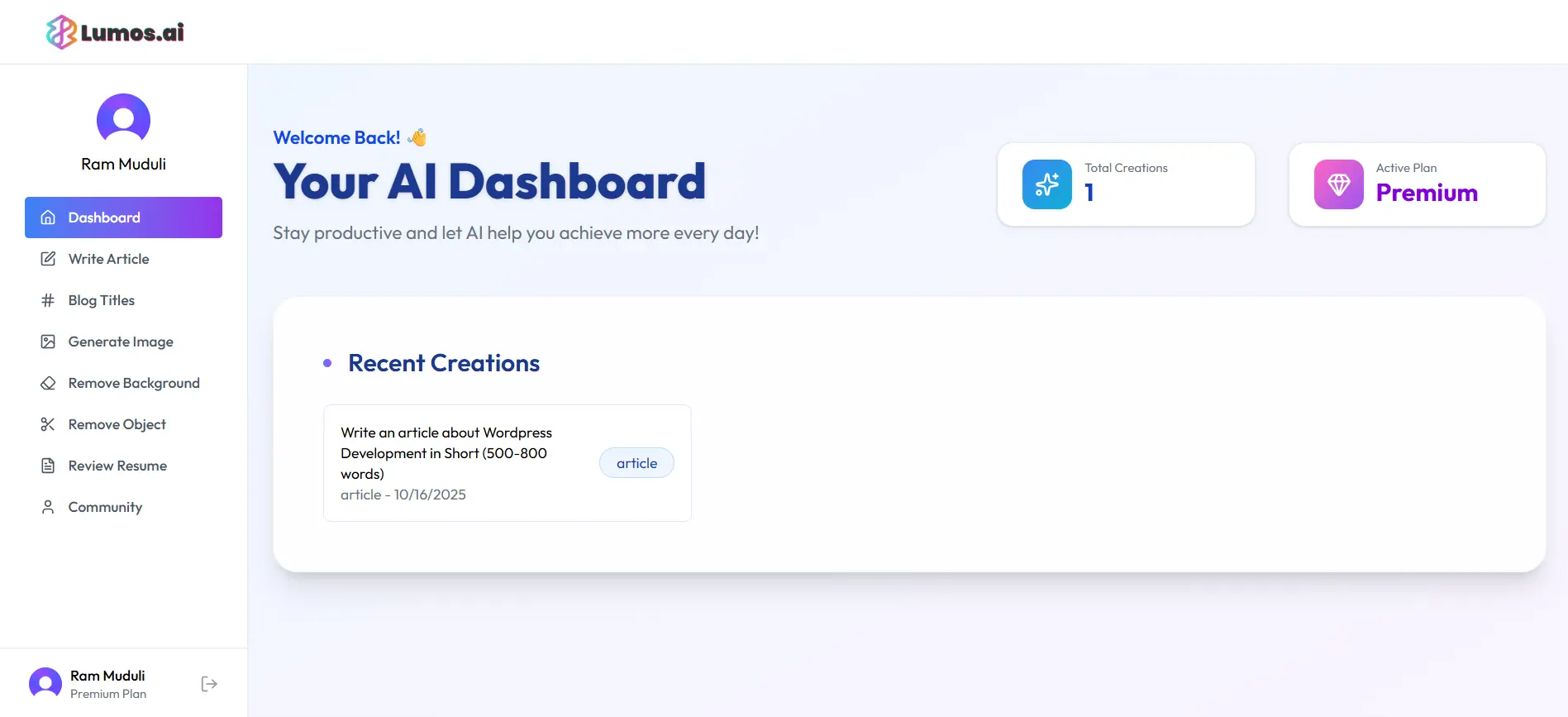
Text tools — article generator and blog title generator — use Google Gemini via an OpenAI-compatible API. The backend sends a structured prompt with the user's topic and length preference, parses the response, and stores the result in Neon with user ID, tool type, input, output, visibility flag, and timestamp.
Image tools — generator, background remover, object remover — use ClipDrop. Generated images are uploaded to Cloudinary; the URL is stored in the database and returned to the frontend. The resume analyser was the hardest integration: Multer handles multipart PDF uploads with file size validation, the extracted text goes to Gemini, and the response is structured feedback.
LumosAI is a PERN stack SaaS: React frontend, Node/Express API, Neon serverless Postgres, Clerk for auth and subscription state, Cloudinary for image storage, and three external AI APIs for the tools.